Skip to content

Novel Models of Care at the Primary–Specialty Interface

Explore innovative models that strengthen collaboration between pediatric primary and specialty care to address common challenges, expand workforce capacity, and improve timely access for children and families.
About This Collection

Brief videos and practical implementation information to help departments learn from, adapt, and build upon successful primary care–subspecialty partnership models.

Across the country, pediatric departments are developing innovative approaches to strengthen partnerships between primary care clinicians and pediatric subspecialists. These models aim to extend pediatric expertise, improve timely access to high-quality care, and reduce unnecessary referrals.

This collection is designed to accelerate peer-to-peer learning by sharing brief videos, implementation information, supporting resources, and opportunities to connect directly with participating teams.

Explore the models below to see how peers across the country are approaching common challenges in new ways. The collection will continue to grow as additional models and resources are identified.

Featured Models

West Virginia University (WVU) Medicine

Clinic-to-Clinic Telemedicine

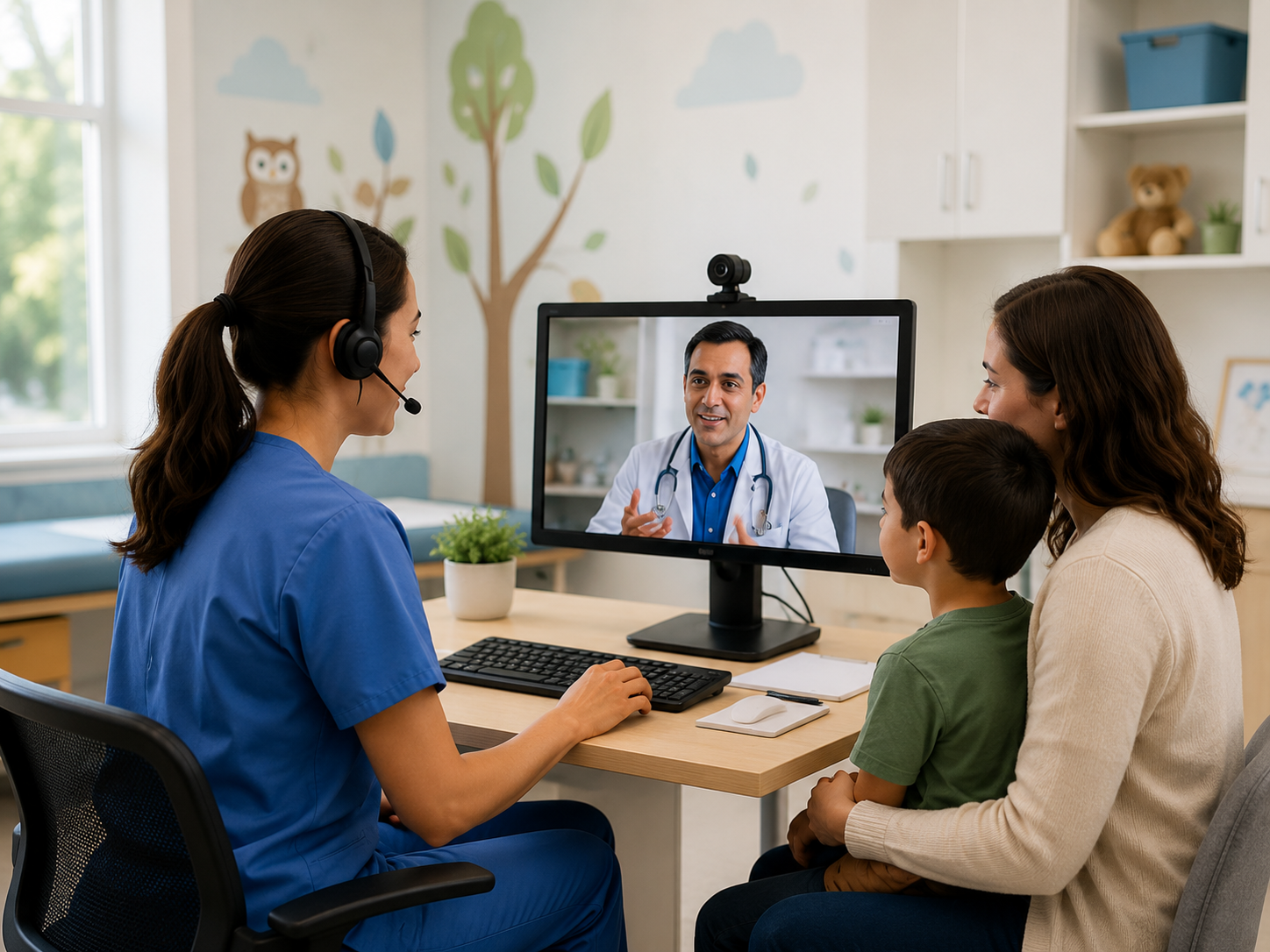
Addresses access barriers for rural families through a clinic-to-clinic telemedicine model connecting local primary care sites with pediatric specialists at an academic medical center. Advanced practice providers at five locations across the state facilitate patient evaluations and present patients to specialists by video, allowing collaborative clinical decisions to be made in real time.

University of Mississippi Medical Center

CHAMP

Provides free, same-day telephone consultation and education to pediatric, perinatal, and school-based clinicians across Mississippi. CHAMP’s multidisciplinary team offers guidance on diagnosis, medication, and treatment planning to strengthen clinicians’ confidence in managing behavioral health needs and improve access to mental health care.

Children’s Hospital of Philadelphia

Shared Headache Care

Uses an EHR-integrated Headache Management Tool to support shared care between primary care clinicians and pediatric neurology. The tool provides real-time guidance on evaluation, treatment, referral, and documentation, helping primary care clinicians manage common headache conditions and preventing unnecessary referrals.

Program website not available

Contact Dr. Alex Fiks

Duke University

Children’s Specialty Services of Fayetteville

APP-Led Pediatric Cardiology Care

Provides specialty pediatric cardiology care closer to home for children and families across southeastern North Carolina through an APP-led community clinic connected to Duke’s pediatric cardiology team. An advanced practice provider manages day-to-day care locally, supported by rotating subspecialists, real-time cardiac imaging interpretation, and telehealth consultation, reducing travel barriers while maintaining access to highly specialized care.

Program website not available

Contact Bridget Dolan

Indiana University School of Medicine

Early Autism Evaluation (EAE) Hub System

Expanding Autism Diagnosis Through Primary Care

A statewide network that trains and supports community primary care clinicians to provide streamlined autism diagnostic evaluations for young children closer to home. Through specialized training, standardized evaluation pathways, and ongoing collaborative support, the model expands diagnostic capacity, reduces reliance on scarce subspecialists, and helps children and families access diagnosis and intervention earlier.

Share a Model

Have an innovative model of care to share? We invite pediatric departments and programs to submit brief videos highlighting approaches that strengthen collaboration at the primary–specialty interface.

Explore Other Resource Hub Pages

Continue exploring resources from across the AMSPDC Pediatrics Workforce Initiative.

Back To Top